


How Ginger and Brown Sugar Became NYC’s Winter Wellness Ritual — Tradition Meets Science
- Upstairs NYC

- Feb 1
- 3 min read
As winter grips New York, many locals are rediscovering an age-old combination for warming the body and calming the mind: ginger and brown sugar. Far from a fad, this pairing is rooted in traditional health practices and now carries mounting scientific interest — particularly around how it influences digestion, thermogenesis (heat production), and overall wellness.
🌿 The Science Behind Ginger’s Warming Power
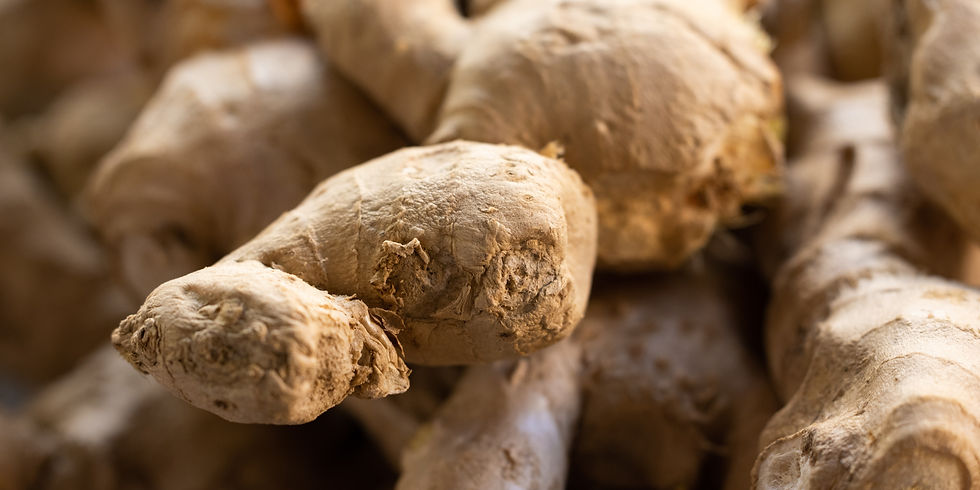
Ginger (Zingiber officinale) has been used for thousands of years in East Asian health traditions for its warming and digestive qualities. Today, modern research provides a window into how ginger may support the body’s internal heat mechanisms.
One small human study found that consuming a hot ginger beverage containing about 2 grams of ginger powder increased the thermic effect of food — the calories your body expends to digest and process meals — by roughly 43 kilocalories compared to a control drink, and also reduced subjective feelings of hunger. This suggests ginger’s potential to mildly elevate post-meal energy expenditure and support satiety.
At the biochemical level, bioactive compounds in ginger such as gingerols are believed to stimulate pathways related to circulation and metabolism. These compounds may interact with sensory receptors involved in temperature perception and promote blood flow, potentially contributing to a sense of warmth and improved peripheral circulation.

🍯 Why Brown Sugar Complements Ginger
Brown sugar, more precisely non-centrifugal cane sugar, is often misunderstood as merely a sweetener. Chemically, however, it differs profoundly from refined white sugar.
Because it is minimally processed, brown sugar retains iron, potassium, magnesium, and B-vitamins, along with polyphenols derived from molasses. Analytical studies show that these micronutrients are almost entirely absent in refined sugar.
Physiologically, this matters for two reasons:
Mineral availability supports metabolic reactions, many of which are temperature- and enzyme-dependent.
Potassium plays a role in fluid balance, supporting the excretion of excess sodium and contributing to reduced edema — a subtle but meaningful aspect of detoxification.
In traditional Wakan and Kampo interpretations, brown sugar is classified as warming and nourishing. It is believed not only to replenish energy, but to act as a carrier, helping distribute ginger’s heat throughout the body rather than allowing it to dissipate locally.
Modern nutritional science increasingly aligns with this view, suggesting that unrefined sugars may moderate glycemic response and oxidative stress compared to refined counterparts.
Why Temperature Matters for Detox
The idea that “warming the body supports detox” is not merely philosophical.
Metabolic research demonstrates a clear relationship between core body temperature and metabolic rate. According to thermal biology models, a 1°C increase in body temperature can raise metabolic activity by approximately 10–13%, a relationship described by the Q10 coefficient.
This increase in metabolic rate has downstream effects:
Enhanced hepatic enzyme activity
Increased renal blood flow
Faster biochemical processing of endogenous and exogenous toxins
In other words, detoxification is not a passive cleanse — it is an energy-dependent metabolic process. Supporting thermogenesis supports detox capacity.
A New York Ritual, Rediscovered
In NYC, ginger and brown sugar are quietly re-entering daily life — as warm drinks after cold commutes, as caffeine-free evening rituals, and as seasonal offerings in cafés and wellness spaces.
What makes this ritual resonate today is not nostalgia, but relevance. In a city defined by stress, cold exposure, and constant stimulation, the goal is no longer to shock the body into health, but to restore internal conditions where metabolism, circulation, and recovery can function optimally.
Ginger and brown sugar offer precisely that: a culturally rooted, scientifically intelligible way to warm the body from the inside out.
Source :
Thermic effect of food with ginger: Mansour et al., randomized controlled trial showing enhanced thermogenesis and satiety with ginger beverage.
Synergy of brown sugar + ginger: In vitro research showing antioxidation and anti-inflammation effects in combination teas.
Ginger biochemical actions (gingerol): Bioactive mechanism supporting circulation and temperature perception.
Journal of Food Science and Technology: "The potential of non-centrifugal cane sugar to improve human health"


